Overbite and overjet describe different things
An overbite describes the vertical overlap of the upper front teeth over the lower front teeth. Some overlap is normal; excessive overlap is often called a deep bite. Overjet describes the horizontal distance between the upper and lower front teeth.
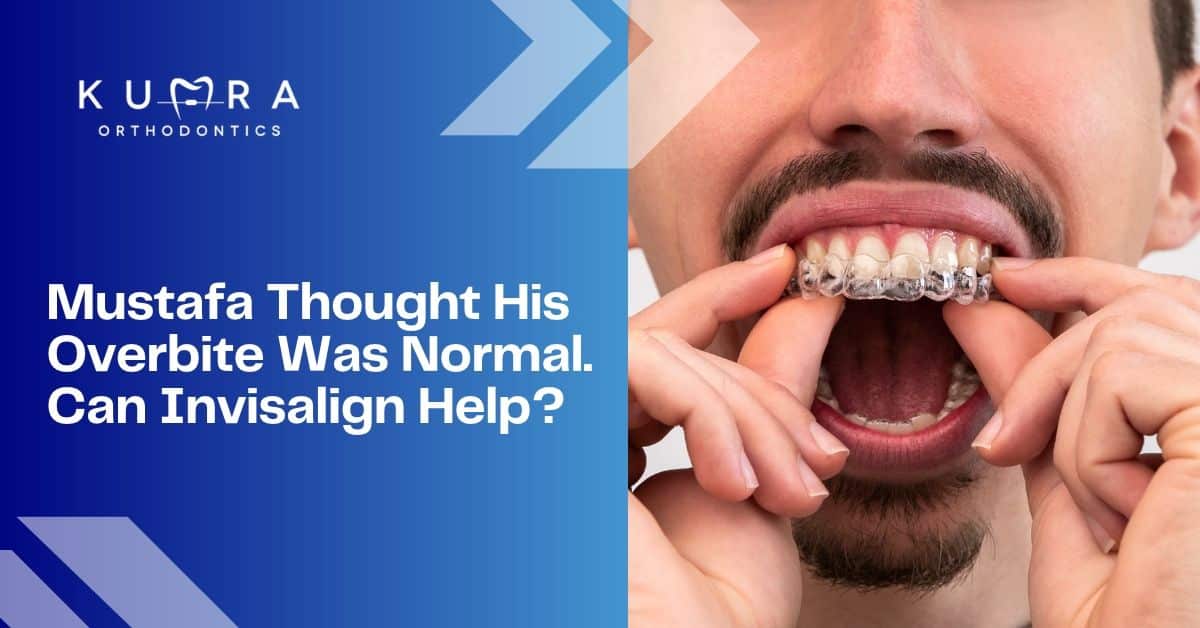
People often use “overbite” for either concern. Mustafa uses that word in the video while also describing his front teeth as being forward. His interview does not provide measurements or enough clinical information to label his exact bite problem from the interview alone.
That distinction matters because two smiles that look similar in a photograph may need different treatment. Ask your orthodontist to show you what the term means in your own mouth.

When clear aligners may help
Clear aligners can treat a range of tooth-position and bite problems. Their suitability depends on the movements required, the relationship between the jaws, and the patient’s ability to follow the plan. Some cases are better suited to braces or a different approach.
During an assessment, the question is whether aligners can achieve the intended correction predictably for you. It is not enough to compare your smile with an online before-and-after photograph. Records and an examination provide information that a selfie cannot.
Our Invisalign treatment page explains the overall process. For a comparison of appliance choices, read how we help patients decide between braces and Invisalign.
What Mustafa found easier than expected
In the interview, Mustafa says he had worried about the cost and the commitment. Once he started, wearing the aligners became part of his routine. He also describes feeling more confident as treatment progressed.
That is his account of his experience, not a guarantee of someone else’s results or treatment length. It does, however, identify two useful consultation topics: what the financial plan includes and what daily treatment will ask of you.
If you have a busy school or work schedule, describe a typical day. Discuss meals, travel, and any times when wearing an appliance could be difficult. The best plan is one you understand well enough to follow consistently.
Questions to ask about an overbite treatment plan
Start by asking whether the concern is excessive vertical overlap, increased overjet, or a combination. Then ask which parts of the problem come from tooth position and which involve the jaw relationship.
Other useful questions include:
- Why are you recommending Invisalign or braces for my bite?
- Will the plan include attachments or elastics?
- How will you check whether the bite is improving?
- What happens if the teeth do not move as expected?
- What follow-up and retention are included?
You should understand what success would look like beyond having straighter front teeth. Ask the orthodontist to describe the proposed changes in plain language.
Wear and follow-up are part of treatment
Removable appliances depend on consistent use. Follow the wear schedule and tray-change instructions provided for your case. If a tray does not fit, an attachment comes off, or you are struggling with the routine, contact the office rather than skipping ahead.
After active treatment, retainers help maintain the result. Include that long-term responsibility in your decision from the beginning.
Why jaw relationships can change the recommendation
Some bite problems mainly involve the position of the teeth. Others also involve how the upper and lower jaws relate to each other. Moving teeth and changing a jaw relationship are not interchangeable goals. Age and remaining growth can therefore affect the treatment discussion.
For a significant skeletal discrepancy in an adult, an orthodontist may discuss care involving an oral and maxillofacial surgeon. The AAO’s overview of orthodontic surgery explains that this approach addresses selected jaw-position problems. It does not mean that everyone who notices an overbite needs surgery.
Ask whether the proposed plan corrects the underlying concern or makes a reasonable improvement within particular limits. Understanding those limits is part of informed treatment planning, especially when comparing two different recommendations.
What attachments and elastics may contribute
An Invisalign plan may involve more than clear trays. Attachments are small shapes bonded to selected teeth that help the aligners apply planned forces. Elastics may be prescribed to support certain bite corrections. Whether you need either depends on the movements in your plan.
The AAO notes that aligners can be combined with orthodontic elastics. Ask your orthodontist to show you each attachment or elastic arrangement and explain its purpose. You do not need to memorize the mechanics, but you should know what to wear, where it belongs, and what to report if it comes loose.
Do not copy another patient’s elastic pattern from a video. Even patients who use the same word for their bite problem can have different instructions. A missing attachment or uncomfortable band is a reason to contact the office, not redesign the plan yourself.

Common questions about Invisalign and overbite
Will I need to wear aligners all day
Expect a substantial daily commitment. The AAO describes typical wear of at least 22 hours a day, with removal for meals and cleaning. Your treating orthodontist should provide the exact schedule and instructions for changing trays. Ask how to handle an unusually busy day or a missed period of wear instead of guessing.
Can I tell whether I am a candidate from a photograph
A photograph may show something worth asking about, but it cannot provide the complete assessment. The orthodontist needs to evaluate the bite and relevant records. Bring photos if they help explain what bothers you, while recognizing that the examination may reveal additional considerations.
Does the number of trays tell me the exact finish date
It does not guarantee one. Ask how progress will be assessed, whether additional aligners may be needed, and what the fee includes if the plan requires refinement. A treatment estimate should explain both the expected course and how changes will be discussed.
Find out what your own bite needs
You do not need to know the correct dental term before booking a consultation. Explain what you notice and what you would like to change. Learn more about Dr. Mina Abdolahi and Dr. Bob Kumra, and bring your questions about comfort, cost, and daily wear. Mustafa’s story can start the conversation; your examination determines your plan.