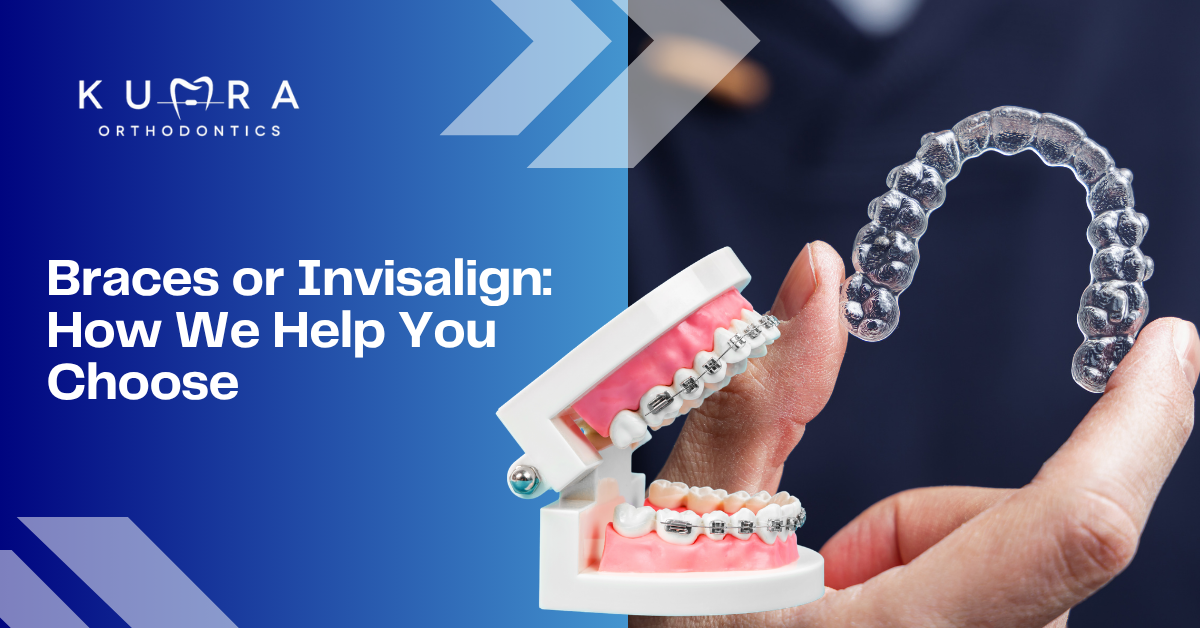
The choice between braces and Invisalign starts with your teeth and bite, followed by the treatment routine that fits your life. There is no single option we would recommend to every patient. Sometimes both can work; sometimes the findings favor one approach.
At Kumra Orthodontics, we want you to understand the reasoning behind the recommendation. An appliance name alone does not explain the movements being planned, your daily responsibilities, or the result we are working toward.
Here is how we approach the decision, what to ask when both options are suitable, and how to compare the full experience before starting treatment.

Why do we start with your records?
We need to understand what is happening before deciding how to change it. Your concerns help define the conversation, while an examination and appropriate records help establish the diagnosis.
The American Association of Orthodontists emphasizes diagnosis before appliance selection. Teeth that look similarly crowded in a photograph may require different plans once the bite and supporting structures are assessed.
Ask us to show you the findings behind our recommendation. Which teeth need to move? Is the concern mainly alignment, the way the teeth fit together, or both? What changes are realistic for your case
How do braces and Invisalign differ in daily life?
Braces are attached to the teeth and use wires and brackets as part of the movement system. Invisalign uses a sequence of removable clear aligners. Each approach comes with responsibilities that should be discussed before treatment begins.
With braces, the appliance stays in place
The AAO’s braces guidance describes fixed appliances and the different designs an orthodontist may consider. Because you do not remove braces for meals, you need to understand how to protect the appliance and clean around it.
Ask us to demonstrate the cleaning routine and explain which foods need to be avoided or prepared differently. Tell us if you have difficulty reaching particular areas when brushing or flossing so we can discuss a workable approach.
You can explore our braces treatment information before your appointment. At the visit, focus on the details of the option being recommended to you, including which components will be visible.
Read more: What to Do With Stains from Braces
With Invisalign, consistent wear is essential
The AAO’s clear-aligner guidance explains that aligners move teeth through a planned sequence and generally require at least 22 hours of daily wear. Follow the specific schedule we prescribe, including when to move to the next set.
Removability can be convenient, but it creates decisions throughout the day. Think about meals, drinks, cleaning, and getting the trays back in afterward. A busy routine does not automatically rule out aligners, but it is worth discussing honestly.
Our Invisalign treatment page gives you an introduction. Bring questions about the daily routine rather than assuming that “removable” means the wear time is flexible.
Read more: How Much Do Braces & Invisalign Cost in DC & Stafford? Costs, Insurance & Payment plans, answered
What if both options are suitable?
If both approaches can meet the treatment goals, your preferences become an important part of the decision. We can compare the practical trade-offs and explain what each would ask you to do.
Think through a typical weekday rather than an unusually organized day. Where do you eat lunch? Can you manage appliance care away from home? Would you prefer an appliance that stays in place, or would you reliably manage one you remove?
There is no need to give the answer you think we want to hear. If you know remembering trays would be difficult, say so. If being able to remove them for meals is particularly important to you, explain why.
We also want to hear about your priorities. Appearance, routine, comfort, and cost may carry different weight for different people. A suitable treatment plan should be discussed in the context of those priorities.
Will Invisalign be completely invisible?
Clear trays are less noticeable than many fixed appliances, but you should understand the full proposed setup. The AAO explains that clear-aligner treatment may include tooth-colored attachments. Other components may also be part of an individual plan.
Ask whether attachments are expected, where they may be placed, and what they will look like. If an upcoming presentation or event is influencing your decision, raise that concern before treatment starts.
The same principle applies to braces: ask to see the specific option being discussed. Do not make a decision using a marketing photograph that leaves out the components your treatment would require.
Why might we recommend one option over the other?
Sometimes the tooth movements, bite correction, or practical demands make one approach more appropriate. The AAO’s discussion of adult treatment options explains that appliance preference must be considered alongside diagnosis and suitability.
Ask us to connect the recommendation to your findings. “Which part of my treatment makes you prefer this option?” is more useful than asking whether braces or Invisalign is better in general.
You can also ask whether another approach is possible and what trade-offs it would involve. We should explain meaningful limitations without making you feel that expressing a preference was a mistake.
If the explanation still feels too general, ask to review the records together. You are entitled to understand the treatment being proposed and the responsibilities that come with it.
Which option is faster or less expensive?
We would not answer either question from the appliance name alone. Ask for a case-specific estimate that explains the scope of treatment and what could change the timeline or cost.
When comparing proposals, make sure you understand what each includes. Are the goals the same? How are follow-up, refinements or adjustments, retainers, and replacement appliances handled? A lower headline figure may describe a different scope, so ask for clarification rather than assuming.
Bring up events and scheduling constraints early. We can discuss them, but a desired finish date should not become a promise before the treatment requirements are understood.
How do you choose the right orthodontic team?
A consultation gives you a chance to evaluate the explanation, the office, and your comfort with the proposed plan. You should feel able to ask questions about both the clinical reasoning and the practical arrangements.
Ask to see examples of similar types of cases and have the similarities and differences explained. Those examples can make the goals easier to understand, but they cannot guarantee the same result for you.
Before we meet, you can learn more about my background and approach to care. Bring your questions, I want you to feel comfortable with the plan we choose together. Useful questions include:
- Why do you recommend this appliance for my teeth and bite?
- What would make the alternative less suitable?
- What will I need to do between visits?
- Who should I contact if something breaks or stops fitting?
- What is the plan for maintaining the result after treatment?
Write down the answers that matter to your decision. If you are comparing options, compare the explanations and treatment goals as well as the appliance names.
What do both approaches have in common?
Both require your participation and professional follow-up. You need to understand appliance care, keep your teeth clean, attend recommended appointments, and speak up when something is not going as expected.
Both also require a plan for retention after active treatment. Ask about that commitment at the beginning. The decision is easier to make when you understand the whole course of care, including what happens after the straightening is finished.

Frequently asked questions
Is Invisalign always better than braces?
No. The recommendation depends on your diagnosis, the movements needed, and the routine you can follow. If both options are suitable, we can discuss the practical trade-offs and your preferences.
Can I choose if both options work for my case?
Yes, your preferences should be part of the discussion. We will explain the responsibilities and limitations of each suitable option so you can make an informed decision.
Will clear aligners need attachments?
They may. Ask us whether attachments are expected in your plan, where they may be placed, and what will be visible. Do not assume that clear trays are the only components involved.
Can I decide from before-and-after photos?
Photos can help explain a type of result, but they cannot replace your examination and records. Ask how the example compares with your case and which differences may affect your plan.
Choose with a clear understanding of your options
To discuss braces or Invisalign for your teeth, request a consultation with Kumra Orthodontics. We can review the findings, explain suitable options, and help you understand the daily routine behind each recommendation. Bring your preferences and questions so the conversation addresses what matters to you.