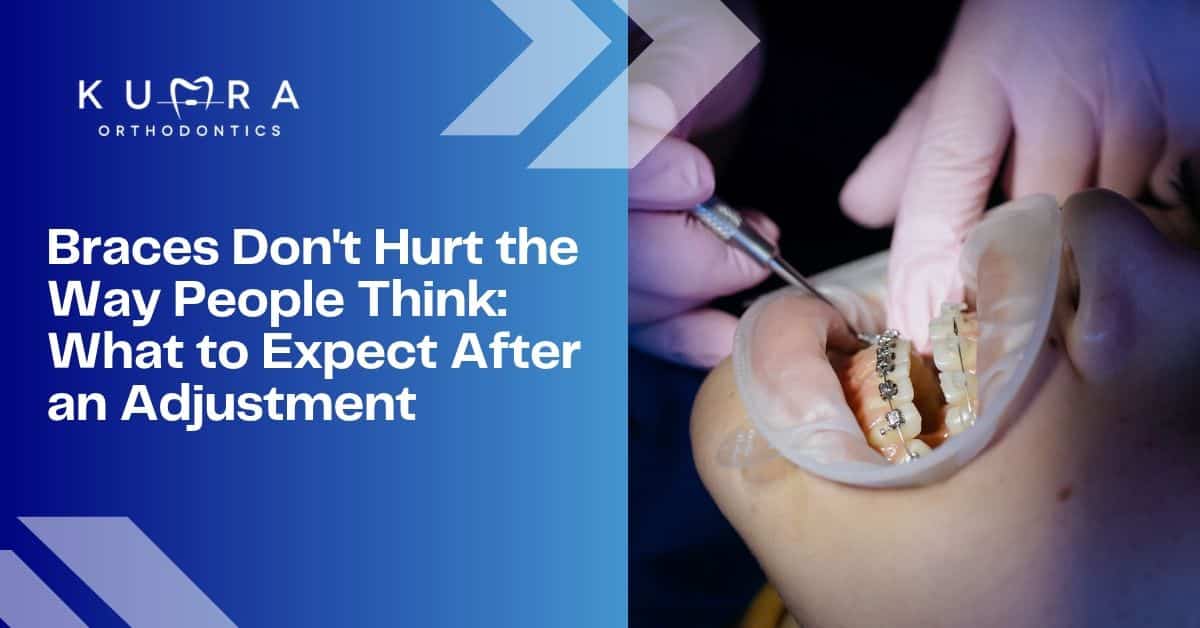
Your teeth may feel tender after a braces adjustment, especially when you bite into food. That soreness usually eases over the next few days. You should not have to spend your entire treatment in pain. At Kumra Orthodontics, we help patients in Washington DC understand what to expect and when discomfort deserves a closer look.
In our video about braces soreness, Dr. Kumra explains that appointments do different jobs. Some involve checking movement and brushing. Others involve changing wires or repositioning brackets. You may feel very little after one appointment and more tenderness after another.

How long do braces hurt after an adjustment
The American Association of Orthodontists describes soreness after an adjustment as temporary, generally settling within a few days. In his video, Dr. Kumra describes a day or two of soreness after some more involved visits. Your experience can differ, and a timeline alone cannot tell us whether a particular symptom is normal.
Pay attention to the direction things are going. Mild tenderness that gradually improves is different from pain that keeps increasing, prevents eating or sleeping, or is concentrated around one tooth. If you are unsure, call and describe it rather than waiting for your next scheduled appointment.
Tender teeth and a poking wire need different responses
Pressure from an adjustment can make biting feel uncomfortable. A bracket rubbing the cheek or a wire poking the lip is a different problem. The location and type of discomfort help us decide what to check.
Before calling, notice whether the soreness is spread across several teeth or comes from one sharp spot. Tell us when it started, whether something feels loose, and whether eating changes the sensation. A clear description is more useful than trying to decide for yourself whether the braces are too tight.
Our braces treatment page explains how the appliances work. The wires and brackets need professional adjustments; trying to tighten or reshape them yourself can create another problem.
Make the next few meals easier
Soft foods can reduce uncomfortable chewing while teeth settle. Scrambled eggs, soft pasta, yogurt, and foods you can gently break apart with a fork are practical options. Dr. Kumra also suggests choosing cooler or room-temperature foods if very hot foods feel uncomfortable.
You do not need to stop eating balanced meals. Adjust the texture and take smaller bites. Avoid hard or sticky foods that can damage the appliance, even once the soreness improves. Keep brushing carefully around the brackets instead of skipping the tender areas altogether.
For a rubbing bracket, orthodontic wax may provide a temporary barrier. If you need pain medicine, ask the orthodontist or pharmacist what is appropriate for your age, health history, and other medicines, and follow the label. Do not use someone else’s prescription.
When to contact your orthodontist
Contact us if pain is severe, getting worse, lasting longer than expected, or associated with a loose bracket or poking wire. Also report swelling, an injury, or difficulty eating and drinking. Trouble breathing or swallowing, or rapidly spreading swelling, requires urgent medical attention.
You can say, “My adjustment was on Monday. Most teeth feel better, but this one area is still sharp when I chew.” We can then explain the next step. You do not need to prove that the problem is serious before asking.
Does soreness mean treatment is working faster
Pain is not a progress meter. A comfortable appointment does not mean nothing happened, and more pain does not mean a better result. Dr. Kumra’s explanation is useful here: some appointments mainly monitor changes that are already underway.
Continue wearing any prescribed elastics exactly as directed. Do not add extra bands or change your schedule to create more pressure. If discomfort makes the instructions difficult to follow, tell us so we can help.
Why an adjustment can make biting feel different
Teeth are supported by tissues that respond to orthodontic forces. After a change to the appliance, those tissues may feel tender while adapting. This helps explain why chewing can be more uncomfortable than simply sitting with your mouth relaxed. The AAO’s explanation of braces discomfort describes this response and distinguishes it from irritation caused by brackets rubbing the cheeks.
An adjustment also does not always mean replacing a wire. Your orthodontist may assess the bite, change another part of the appliance, or leave the current wire working. Ask what was changed that day and what you should expect afterward. Knowing the purpose of the visit can make a new sensation less mysterious.
A practical plan for school or work
Before an adjustment, think about your next meal and where you will be afterward. Packing a softer lunch is easier than discovering that the only available option is something hard to bite. Keep a small care kit with your toothbrush, the cleaning tools you have been shown, and orthodontic wax.
If a bracket starts rubbing during the day, note exactly where it is. Wax may make that spot more comfortable temporarily, but a repeated sharp problem should still be reported. The AAO’s orthodontic emergency guide separates common appliance problems from situations needing more urgent attention.
For children, a parent can help by asking specific questions: “Does it hurt when you chew, or is something scratching your cheek?” That description helps the office give more useful advice than a general report that the braces hurt.
Common questions about soreness
Can I brush if my teeth are tender
Yes, continue gentle cleaning unless your dental team gives different instructions. Use a soft brush and take your time around brackets and the gumline. If one area is too painful to clean, contact the office rather than leaving it untouched for several days. Ask for help with technique if brushing repeatedly catches a sore spot.
Will every adjustment feel the same
No. The work being done and your response can vary from visit to visit. Keep track of anything that feels noticeably different from your previous experience. It is reasonable to ask about a change even if you have already worn braces for months.
Should I wait until the next appointment to report a broken bracket
Tell the office when you notice it. You may not need an immediate visit, but the team should make that decision based on the appliance and your symptoms. Include whether the bracket is still attached to the wire and whether it is rubbing. Do not assume that a painless break can be ignored.

Get advice for your own adjustment
If you are worried about soreness, contact the practice with the appointment date and a description of what feels different. You can also learn about Dr. Bob Kumra and Dr. Mina Abdolahi before your visit. A quick conversation can help you understand whether to keep watching the improvement or come in for an assessment.