Clean Invisalign retainers gently, keep them away from heat, and follow the instructions for your particular appliance. A clear retainer can look similar to a treatment aligner, but it has a different job: maintaining tooth position after active treatment. At Kumra Orthodontics, we help patients in Washington DC build a cleaning routine that fits their retainer and wear schedule.
Start by confirming what you have. The product name matters when choosing a cleaner.

A simple daily cleaning routine
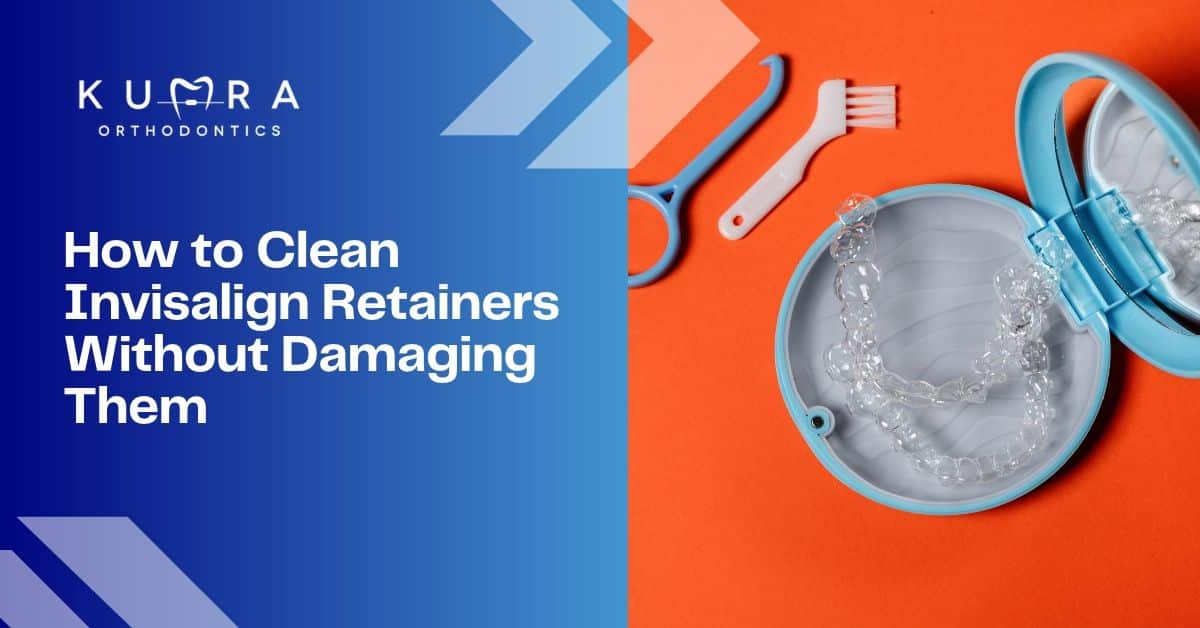
When you remove the retainer, rinse it with cool or lukewarm water. Gently clean its inner and outer surfaces with a soft brush, using the cleaning method recommended for that retainer. Rinse it thoroughly before wearing it again.
Do not scrub harder to remove stubborn deposits. If the surface stays rough or cloudy after normal cleaning, ask the team to inspect it. What looks like dirt may be buildup, wear, or a change in the material, and each calls for a different response.
Keep the case clean as well. Follow its care instructions and avoid leaving the retainer loose on a bathroom counter, in a pocket, or wrapped in a tissue. A case is easier to recognize and less likely to be thrown away accidentally.
Can you use toothpaste on a clear retainer
Instructions are not identical for every appliance. Invisalign’s Vivera guidance allows gentle cleaning with non-abrasive toothpaste. The American Association of Orthodontists’ general cleaning guide advises avoiding toothpaste on retainers because abrasive products can scratch the material.
The practical answer is to use the instructions for the retainer you actually own. Avoid whitening pastes and abrasive powders. If you are unsure which product is suitable, send the office the retainer brand and a photo of the cleaner label before using it. A soft brush and water can provide a gentle rinse-and-clean step while you get specific guidance.
Using a retainer cleaning product
Choose a product labeled as suitable for your appliance and follow its directions for water temperature, concentration, and soaking time. Products with similar names can have different instructions.
For the Invisalign Cleaning System reviewed for this guide, the manufacturer instructs users to rinse the appliance, dissolve the crystals in warm rather than hot water, soak for at least 15 minutes, and rinse thoroughly afterward. Check the packaging of your own product instead of assuming every cleaning tablet follows that schedule.
Soaking for longer or mixing products does not automatically make the retainer cleaner. Avoid homemade chemical combinations and do not use bleach or harsh household cleaners in an oral appliance.
Heat and rough handling can change the fit
Keep clear retainers away from boiling water, dishwashers, and hot cars. Heat can distort the plastic. Handle the appliance carefully and follow the removal technique shown by your orthodontist.
If a retainer feels different after cleaning, do not try to reshape it with warm water. A retainer that no longer seats fully, has a sharp edge, or causes significant pain needs professional advice. Our article on tight retainers explains why a change in fit deserves attention.
Cleaning does not replace the wear schedule
In his retainer video, Dr. Kumra explains that long-term wear is important and that appliances eventually wear out. Make cleaning part of that routine, using the instructions for your particular appliance.
Follow your own prescribed schedule rather than extending time out of the mouth to try repeated cleaning methods. Read why retainers remain part of treatment if you are unsure why continued wear matters.
Keep the teeth underneath the retainer clean too
A clean appliance should go back onto clean teeth. Brush with fluoride toothpaste and clean between your teeth according to your dental team’s instructions. Cleaning the tray alone does not remove plaque from tooth surfaces or the spaces between teeth.
The AAO’s retainer-care guidance advises limiting drinks to plain water while wearing a clear retainer. Colored drinks can stain, and sugary or acidic liquids can collect between the plastic and teeth. Ask how to fit meals, drinks, cleaning, and the prescribed wear schedule together if you are still wearing retainers during the day.
For example, a coffee that you sip over an hour creates a different routine challenge from a drink with breakfast. Discuss the habit with your orthodontist rather than repeatedly leaving the retainer out longer than prescribed.
What to do about cloudiness or white deposits
Cloudiness is a description, not a diagnosis. It can be difficult at home to distinguish removable buildup from scratches or material wear. Do not scrape the surface with a metal object, use an abrasive powder, or keep escalating to stronger chemicals until the tray looks clear.
Instead, note when the change appeared, whether the surface feels rough, and which cleaning products you have used. Bring the retainer to a checkup. If fit and comfort have changed too, contact the office sooner. Appearance is only one part of judging whether the appliance remains suitable.
The AAO’s retainer overview recommends individual guidance when a retainer no longer fits as it did. Making the plastic look clearer cannot correct a distorted shape.

Common retainer-cleaning questions
Can I use mouthwash as a soaking solution
Do not assume mouthwash is suitable for your retainer. Some formulations contain alcohol or coloring, and a product intended for rinsing your mouth may not be approved for prolonged contact with the appliance. Use a compatible cleaner recommended for the retainer, and ask about a specific product if its label is unclear.
Do fixed retainers need the same routine
No. A bonded wire stays in the mouth and needs cleaning around the wire and between the teeth. Ask the team to demonstrate a floss threader or other appropriate aid. Do not try to remove the wire for cleaning. Report a loose bond even if most of the wire still seems attached.
Should I replace a retainer just because it is old
Age alone does not tell you whether it still fits or functions properly. Bring it to a review and describe any changes. A well-cared-for appliance may remain useful, while a newer one can need attention after heat damage, cracking, or changes in tooth position. Follow the replacement advice for your own appliance.
When to ask about replacement
Contact the office about cracks, distortion, persistent odor after appropriate cleaning, or a retainer that has stopped fitting. Bring the appliance and the name of the cleaning product you use. We can assess whether care instructions need adjusting or whether it is time to discuss retainer replacement.
You can learn about Dr. Bob Kumra and Dr. Mina Abdolahi before your visit. The aim is a retainer that is clean, comfortable, and still doing its intended job.