“You’re saying my child needs an expander, but they aren’t ready for braces?”
That can sound like two conflicting recommendations. They make more sense once we separate the problem we want to address now from the tooth alignment we may finish later.
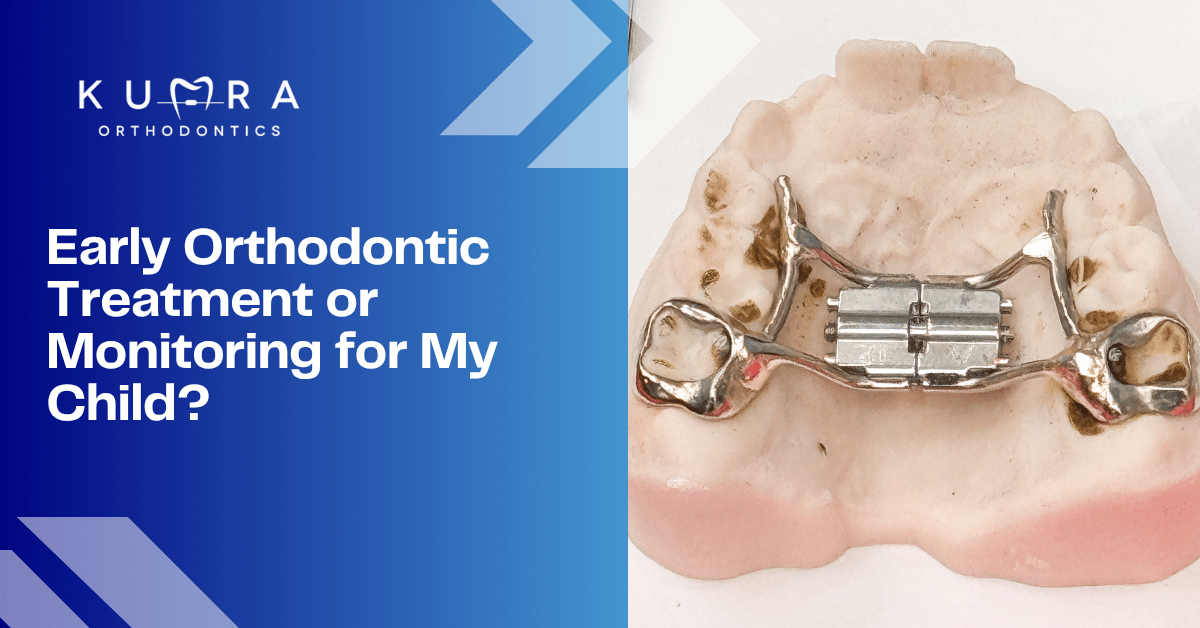
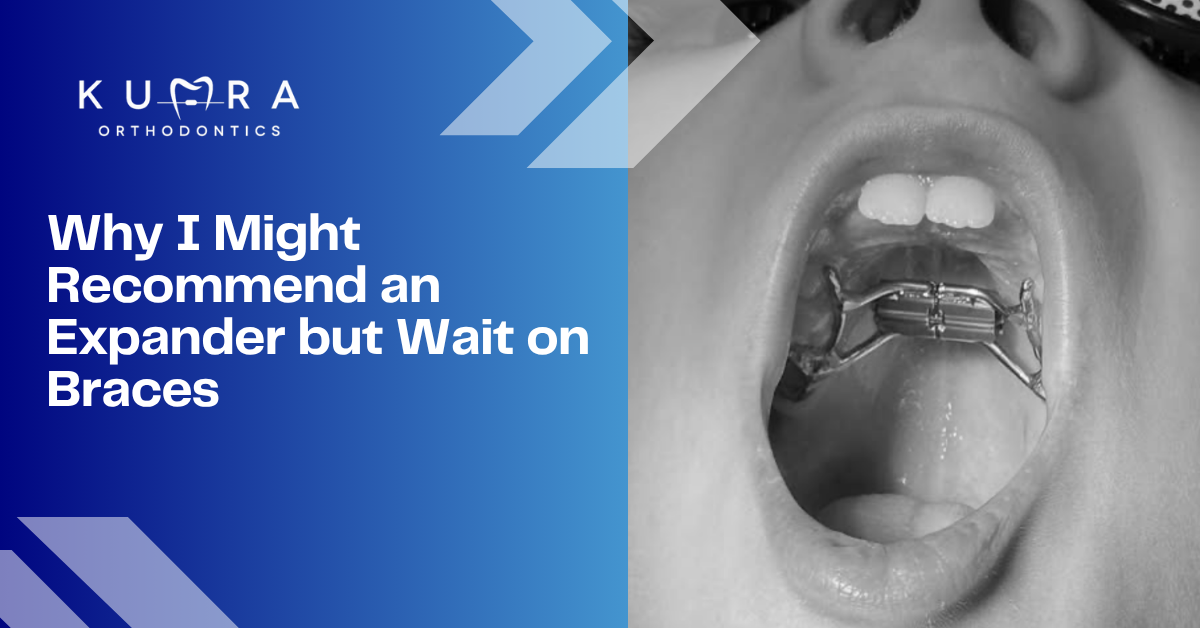
An expander may be recommended to address a narrow upper jaw while a child is growing. Braces or aligners may come later, when more permanent teeth are ready to be aligned. Those decisions can have different timing because they serve different purposes.
That does not mean every child needs two phases of treatment. It means that, when I recommend an early step, I should be able to explain what that step is meant to accomplish and why I would not simply wait.

At an early visit, I am looking at what is developing
When I see a child around seven, eight, or nine, I am checking how the adult teeth are coming in and what is happening with the jaws. Is there enough room? Is a baby tooth staying longer than expected? Is the upper jaw too narrow?
A child can still have baby teeth and give us useful information about all of those things. We do not need to wait for the last baby tooth to fall out before taking a look.
The AAO recommends a first orthodontic checkup by age seven. That is a recommendation for an evaluation. It is not a deadline for getting an appliance.
Sometimes I see a child and feel comfortable saying that things are developing well and we will check again later. Sometimes a finding gives us a reason to talk about an early intervention. The point of the appointment is to work out which situation we are dealing with.
That interval needs an explanation. What was the first phase intended to achieve? What are we waiting to see next? When should your child return for review?
In the later phase, braces or Invisalign may be used to align the permanent teeth and finish how the bite fits together. The choice and timing depend on the child’s needs; the early plan should not be mistaken for a complete prediction of every later appointment.
There is another distinction within expansion itself: finishing active adjustments does not necessarily mean the appliance comes out immediately. Time may be needed to stabilize the result. Your orthodontist should explain which stage your child is in so that a period without adjustments does not look like unexplained inactivity.
What I would want parents to understand before starting
The decision should come down to a few clear answers, not a long list of appliance terminology.
First, what is the specific problem? Next, why address it at this stage? Then, what is the goal of the proposed treatment and what might still be needed afterward?
Those answers help you judge the recommendation. They also help you explain it to your child without making promises we cannot make, such as “Once this comes out, you’ll be completely finished.”
The financial conversation should follow the same structure. Find out whether the proposed fee covers the early phase only, what follow-up is included, and how later treatment would be planned and priced. Do not assume that one quote includes every future stage.
The appliance also needs to fit your family’s routine
Before starting, you need to know what care happens at home and who will be responsible for it. Expander designs vary, so instructions must match the appliance prescribed.
If adjustments are required, have the team demonstrate them. Be clear about the schedule, how to record them, and what to do if you are unsure an adjustment was completed. Do not add extra adjustments on your own.

Questions about expanders and later braces
Does every child who needs braces need an expander first?
No. Expansion addresses particular problems. The recommendation depends on the examination and the child’s development, not on a standard sequence every patient follows.
Why not wait until all the adult teeth are present?
Some developmental concerns are worth assessing earlier. An evaluation helps determine whether there is a reason to intervene or whether waiting and monitoring is appropriate.
Does needing braces later mean expansion failed?
Not by itself. Expansion and later tooth alignment may have different goals from the outset. Review the goals of the early phase and what it was expected to accomplish.
Can I get another opinion before starting?
Yes. Bring the recommendation and ask which records would be useful. Focus the discussion on the reason for expansion, the timing, and what would happen if treatment were deferred.
If this is the decision your family is facing, arrange a consultation with Kumra Orthodontics. We can examine your child and explain whether the next step is an appliance or another check as development continues.