Your child’s dentist has not mentioned orthodontics, but an adult tooth is coming in behind a baby tooth. Or perhaps the question is about you: you have noticed crowding and are wondering whether you need your dentist’s permission to have it checked.
You can book an orthodontic consultation directly. You do not need a referral to come see an orthodontist. The more useful question is what you want the visit to help you understand.
For a child, that may be whether the teeth and jaws are developing as expected. For an adult, it may be whether a change in alignment is something we can treat. Neither question requires you to arrive with a diagnosis or a decision to get braces.

A checkup can end with “nothing is needed right now”
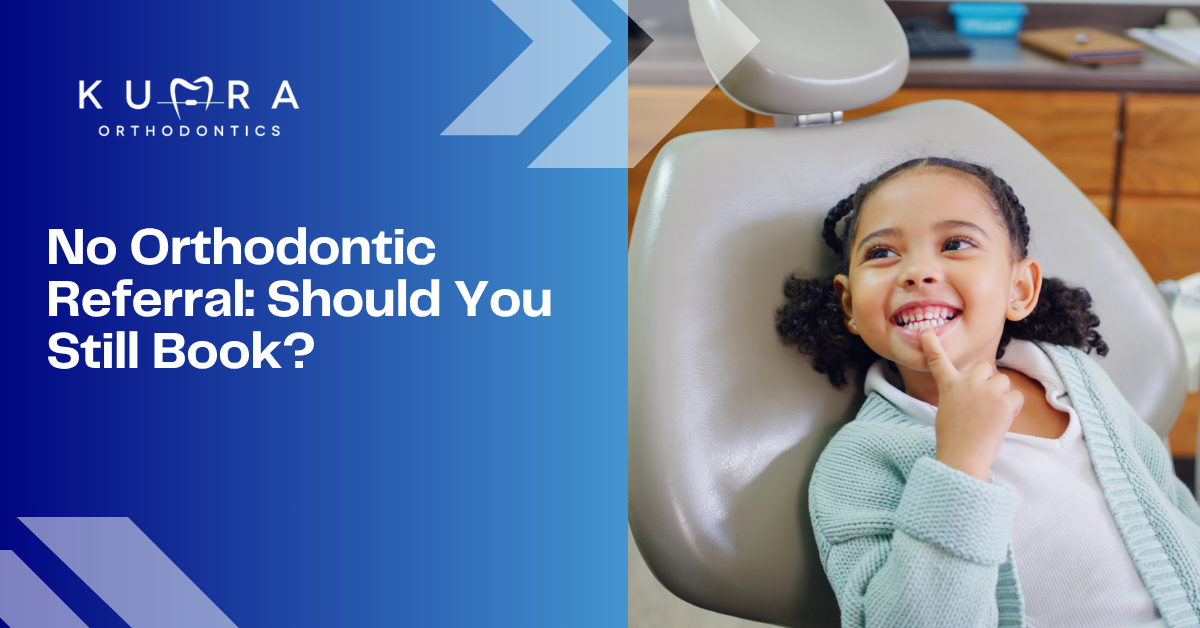
When I see a seven-, eight-, or nine-year-old, sometimes my recommendation is simply to come back for another check. Everything may be happening well naturally. I feel good telling a parent that.
That is why I do not want families to think of the first visit as the appointment where we choose braces. We may be years away from that conversation, and some children will not need early treatment at all.
I am checking how the adult teeth are coming in. Is there space? Is a baby tooth hanging around longer than expected? Is the upper jaw wide enough? Those are developmental questions we can examine while your child still has baby teeth.
The American Association of Orthodontists recommends a first checkup by age seven, even without a dentist’s referral. That timing gives us a chance to assess development. It does not establish that your child needs an appliance.
There are two possible outcomes parents sometimes confuse: “We should take a look” and “We should start treatment.” The examination is how we work out which next step makes sense.
What the absence of a referral does and does not tell you
It tells you that a referral has not been made. By itself, it does not explain whether your concern needs orthodontic treatment.
Your dentist may already be watching your child’s development, or you may not yet have discussed the particular thing you are noticing. You can bring it up at your next dental appointment. You can also contact us directly.
Suppose you notice an adult tooth appearing behind a baby tooth. That observation is useful to share, but it cannot tell you on its own whether we should monitor, coordinate another step with the dentist, or discuss orthodontic care. I need to examine the situation before making that recommendation.
The same applies if you think the bite looks uneven. Tell me what you see and when you noticed it. You do not need to decide whether it is a jaw problem or a tooth-position problem before calling.
Our children’s orthodontic evaluations are a place to start that conversation. If your child is older than seven, you can still arrange a visit. There is no benefit to postponing a question because you think you should have asked it earlier.
Adults can take the same first step
You may be thinking about a tooth that has shifted since earlier treatment, or an alignment concern you have never addressed. You can make the appointment yourself.
What helps me is knowing your starting point. Have you worn braces or aligners? Do you have a retainer? Is your dentist planning other dental work? What would you like to change, and what have you noticed about the way your teeth fit together?
Those answers are more useful at the beginning than a firm preference for a particular appliance. We can discuss treatment options after we understand the problem and your goals.
If you are still deciding whether this is something you want to pursue, that is fine. Our adult orthodontic care starts with an assessment, not an assumption that you are ready to begin treatment.
Booking directly does not leave your dentist out
Communication between the offices is our responsibility too. If care needs to be coordinated, we can contact your dentist and explain what we are recommending.
For example, if your dentist has already discussed another procedure, tell us before we plan orthodontic treatment around it. We need to understand how the pieces fit together. Bring the dentist’s name and let the team know about any recent records or recommendations.
You do not need to act as the messenger for every clinical detail. We can explain what information we need and arrange communication between the offices. Continue your regular dental examinations and cleanings while receiving orthodontic care.

Booking and insurance are separate questions
You can contact us without a referral, but your plan may have its own benefit or authorization requirements. Send the team your current insurance information so we can clarify what applies before care begins. Our insurance and payment options explain how we help with that process. You do not need to solve the insurance question on your own before calling.