
We never want cost to be the reason a family in Stafford or a professional in DC doesn’t get the care they need. Our financial coordinators map out every available benefit before a patient commits to a single dollar. The goal is to build a payment structure around your life, not the other way around.

What braces and Invisalign actually cost
At Kumra Orthodontics, comprehensive braces generally range from $4,000 to $7,000, and Invisalign typically runs about $1,000–$1,500 more than braces for a comparable case. Straightforward alignment cases tend to land at the lower end. Meanwhile, more complex bites, such as significant crowding, open bites, or correcting a prior relapse, sit toward the higher end no matter which appliance you choose.
One thing worth saying plainly: a quoted fee should cover the whole journey, including your visits, appliances, check-ins, x-rays, and your first set of retainers, all with no surprise per-visit copays. If a practice charges you every time you come in, ask about it before you start.
That kind of transparency is something our patients notice. As one patient shared after coming in for a second opinion:
*”Had an orthodontic consultation for a second opinion. Previous ortho consult resulted in a costly and lengthy treatment plan… Dr. Mina was completely honest with me and gave her analysis in a way that presented options as well as her recommendations for treatment, which did not even require any orthodontic work. They do not just tell you all the reasons why you need to drop a bunch of money in their pocket. They are honest.” Google review, Stafford office
It’s also worth remembering what you’re investing in. Untreated misalignment tends to accelerate tooth wear, raise the risk of gum disease, and can contribute to jaw strain over time, all of which carry their own long-term costs. Therefore, straightening now is genuinely preventive.
The 5 things that drive your price

No two mouths are the same, so no two quotes are either. Five factors do most of the work in determining your number:
Age and treatment stage. A child’s developing jaw allows for different, often simpler interventions than a fully-formed adult bite.
Case complexity and duration. Minor crowding is far less involved than correcting a real bite discrepancy. Most treatment runs 12–36 months, and time is a cost driver.
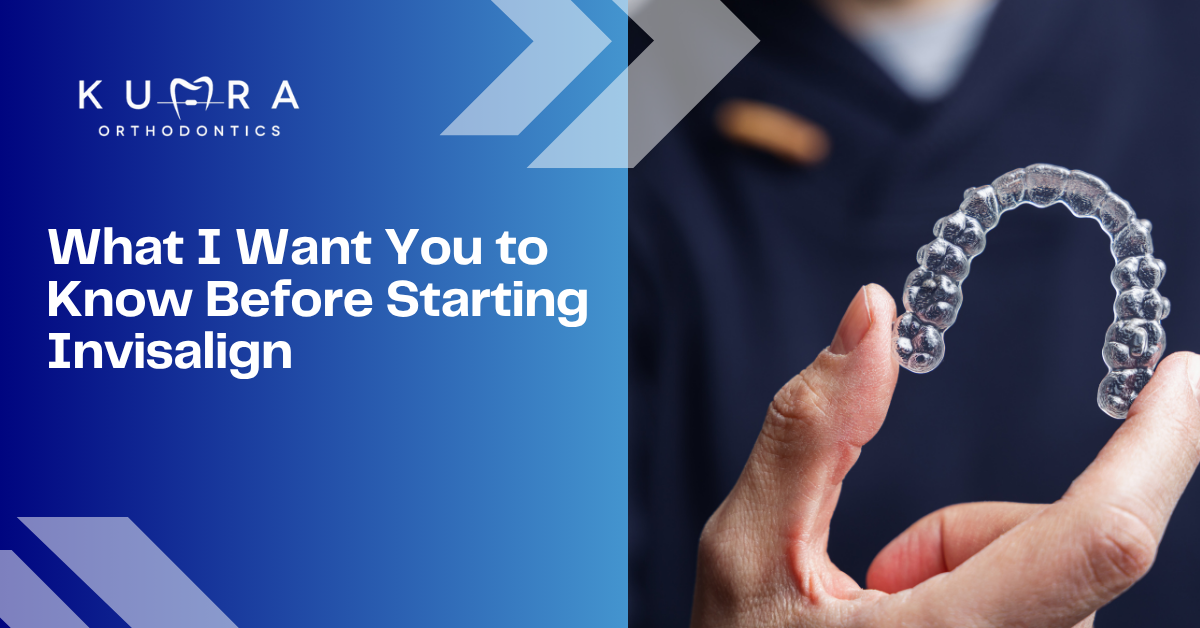
Type of braces or aligners. Traditional metal braces are usually the most economical. In contrast, clear ceramic braces and custom aligners like Invisalign come at a premium.
Insurance coverage. Your plan can meaningfully reduce your out-of-pocket cost (more on that below).
Financing. How you spread payments out changes what treatment feels like month to month, even when the total is the same.

Early treatment (Phase 1) for kids
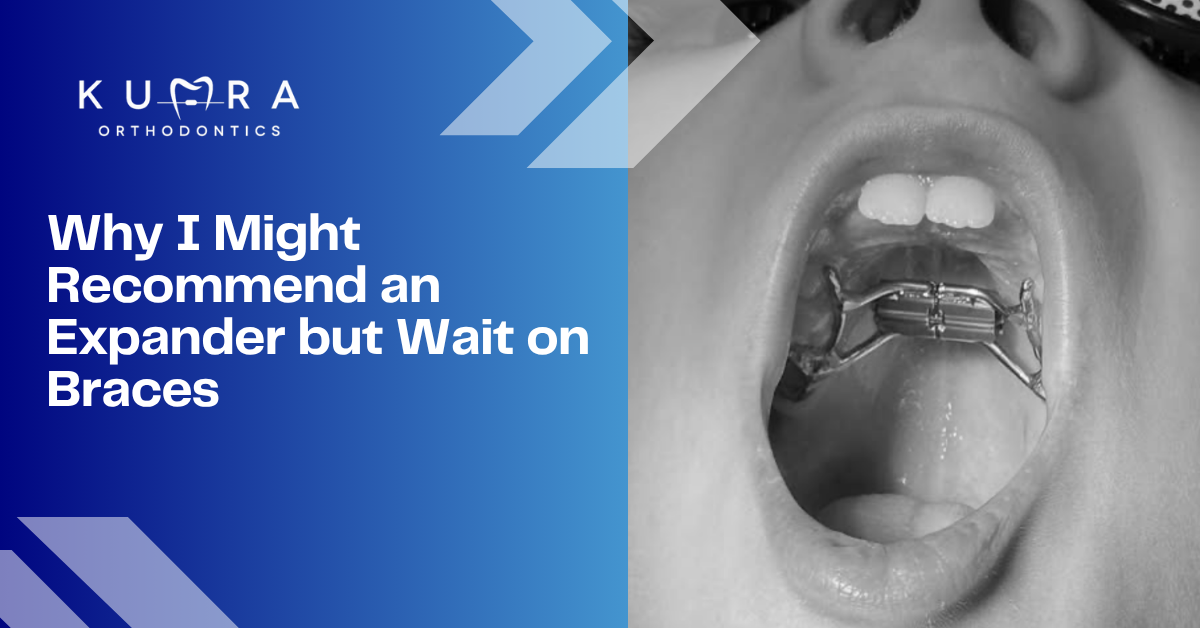
The American Association of Orthodontists recommends a first orthodontic evaluation around age 7. Early treatment isn’t about a perfect smile yet. Instead, it guides jaw growth, corrects habits like thumb-sucking, addresses crossbites, and makes room for permanent teeth. It’s typically shorter (about 12–18 months) and often well-covered by insurance.
Think of Phase 1 as building a proper foundation. It makes the main construction in the teen years much more efficient and predictable.
Teens
The classic full correction most people picture. A full set of braces or Invisalign Teen typically runs 18–30 months, and the cost reflects that comprehensive scope. After a down payment, monthly payments for a typical teen case often fall in the $150–$250 range.
For instance, a 14-year-old from Stafford who plays competitive soccer was a great fit for Invisalign Teen. Treatment took 20 months, and the removable aligners let him keep playing without worrying about bracket injuries.

Adults
It’s never too late. In fact, nearly one in three orthodontic patients today is an adult. Adult treatment can cost a bit more, for real clinical reasons: adult bone is denser so teeth move more slowly, and orthodontists often work around existing crowns, bridges, or fillings.
The numbers back this up. A 2024 analysis of orthodontic fees across 90 DC-metro practices found adult comprehensive treatment cost about 14% more than equivalent teen treatment. This was driven mainly by longer average treatment time (22.8 months for adults vs. 19.2 for teens) and higher demand for premium aligners. Additionally, adults were more likely to need some pre-treatment dental work, adding an average of about $340 before treatment began.
We see professionals in DC every day who are finally investing in the confident smile they’ve wanted for decades. It’s never too late, and modern technology makes it more comfortable and discreet than ever.
The cost of waiting
One counterintuitive point on early treatment: waiting can sometimes cost more. When a developing issue such as a crossbite, severe crowding, or a habit affecting jaw growth goes unaddressed, it can lead to longer, more complex treatment later. Consequently, it can occasionally require extractions or other interventions that early guidance might have prevented.
That said, not every child needs early braces. An age-7 evaluation is exactly that, an evaluation. Many kids simply get monitored until they’re ready. The point of an early visit is a plan, not immediate treatment.

Budgeting for more than one child: the Sibling Smile Plan
If two or three kids need treatment, the sticker shock is real. However, multi-child families actually have more levers to pull, not fewer. Here’s the playbook we walk families through.
- Timing. Staggering treatments (rather than starting everyone at once) is often clinically better and easier on the budget, because each child begins at the right moment for their own growth.
- Insurance across kids. Orthodontic lifetime maximums are usually per person, so one child using their benefit doesn’t reduce another’s. Furthermore, if your plan has a separate annual family maximum, starting one child in December and another in January can tap two benefit years.
- Sibling discount. We apply a 5% discount for each additional family member who begins full treatment.
- Pre-tax dollars, doubled up. Families can use both parents’ FSAs strategically and take advantage of the FSA rule that makes your full annual election available on day one of the plan year.
- In-house financing. 0% interest, flexible and $0-down options, and payments as low as $189/month.
For instance, a DC family with two kids, a 12-year-old and a 15-year-old, started both at once. With a $1,500 lifetime benefit per child ($3,000 total) and a 24-month 0% in-house plan, their out-of-pocket came to about $175–$190 per child per month.
Paying for it: insurance, FSA/HSA, and financing
This is where a little know-how saves real money.
Insurance
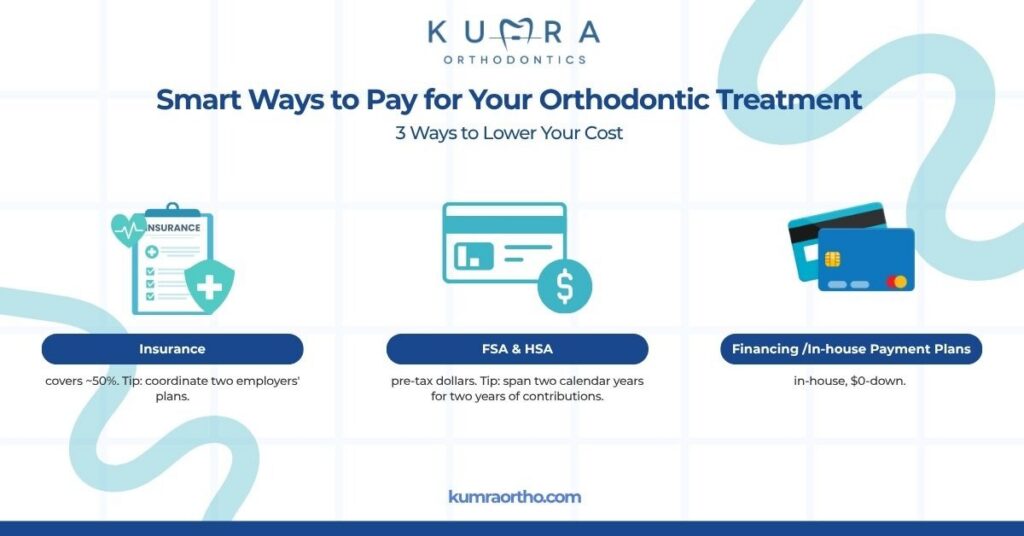
Most dental plans with orthodontic benefits cover roughly 50% of treatment, up to a lifetime maximum (commonly $1,000–$3,500, depending on the plan). We work with most major carriers, including Aetna, GEHA, MetLife, and Delta Dental, which are common among federal employees and contractors in the DC area. Additionally, our coordinators verify your benefits for you before you commit to anything. You can see more on our insurance page.
A move a lot of DC households miss: if you and your partner each have orthodontic benefits through separate employers, those plans can sometimes coordinate. It doesn’t always mean double the benefit, but at minimum we make sure you get the higher of the two, not just whichever gets billed first.
Planning across ages: the long view
The families who save the most tend to think beyond a single child or a single year.
The families I find most satisfying to work with come in with a long-range view, not just for one child, but for the whole family. When we map out who needs what, in what order, and how to sequence insurance benefits across calendar years, families consistently save thousands and reduce the total time their kids spend in treatment. Planning is the highest-leverage thing a family can do.
Get your exact quote, and a free consultation

Every number above is an estimate. The only figure that truly matters is the one built around your specific smile, and that comes from a proper diagnosis.
At your free, no-obligation consultation, we’ll do a complete evaluation, including a comfortable iTero 3D digital scan, and give you an exact, all-inclusive quote along with a clear breakdown of your payment options. No pressure, either way.
Hours: Our Washington, DC office runs weekday hours. Our Stafford, VA office also offers Saturday mornings (9am–12pm), which is handy if weekdays are tough.
Frequently asked questions
How much do braces cost in Washington, DC? Comprehensive braces generally run $4,000–$7,000, depending on the complexity and length of your case. That fee covers your visits, appliances, x-rays, and first retainers, with no per-visit copay.
How much does Invisalign cost in DC and Stafford, VA? Invisalign typically costs about $1,000–$1,500 more than braces for a comparable case, roughly $5,000–$8,500, because of the higher material cost.
Is Invisalign more expensive than braces? Usually a little, yes, due to the custom aligner materials. The right choice depends on your case, not just price.
Does dental insurance cover braces or Invisalign? Most plans with orthodontic benefits cover about 50%, up to a lifetime maximum (often $1,000–$3,500). We verify your specific benefits for you.
Which insurance plans do you accept? We work with most major carriers, including Aetna, GEHA, MetLife, and Delta Dental. Contact us to confirm your specific plan.
Can we use two insurance plans? If both parents have orthodontic benefits through separate employers, we can look at coordinating them so you get the better of the two benefits.
Can I use my FSA or HSA? Yes. Orthodontic treatment is a qualified expense, and spanning two calendar years can let you use two years of contributions.
Do you offer payment plans? Yes. We offer 0% interest in-house financing, $0-down options for qualified patients, and payments as low as $189/month, plus third-party options like CareCredit.
Do you offer a sibling discount? Yes, a 5% discount for each additional family member who begins full treatment.
Do you offer a free consultation? Yes, a complimentary, no-obligation consultation with a 3D scan and an all-inclusive quote, at both locations.
Are you open on Saturdays? Our Stafford, VA office offers Saturday morning hours (9am–12pm). Our DC office is open weekdays.
Does my child need early (Phase 1) treatment? Not necessarily. The AAO recommends a first evaluation by age 7, but many children are simply monitored. The visit is about creating a plan, not starting treatment right away.
Want to see whether braces or Invisalign is the better fit first? Take a look at our treatment options for kids, teens, and adults.