

Should adults choose Invisalign or braces?
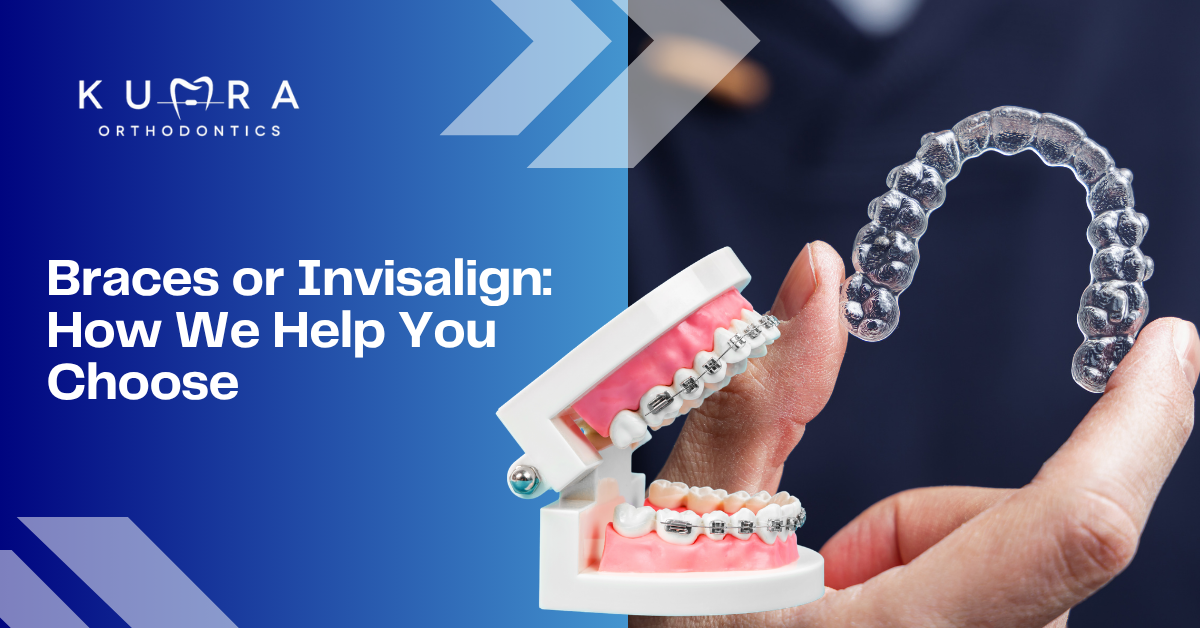
Neither option is automatically correct because you are an adult. We consider the movements needed and the treatment routine you can maintain. Sometimes both options are reasonable; sometimes there is a clinical reason to recommend one.
Our Invisalign treatment page and braces information introduce the approaches. At the consultation, ask us to explain how each suitable option would apply to your case.
Bring up the details of your day: frequent travel, meals away from home, public speaking, caregiving, or a changing work schedule. Those details help turn a discussion about appliances into a discussion about treatment you can realistically follow.
If appearance is your biggest concern, say so. Ask what would be visible and whether additional components would be needed. Do not assume that a photograph of another person’s appliance shows exactly what yours would look like.
Read more: How Much Do Braces & Invisalign Cost in DC & Stafford? Costs, Insurance & Payment Plans, Answered
What if I had braces years ago?
Previous treatment is useful history. Tell us when it happened, what retainers you used, and what has changed. If you still have an old retainer, ask whether to bring it so we can evaluate the situation.
The AAO explains that teeth can shift after orthodontic treatment. A current examination is needed to work out whether the concern is limited or whether broader treatment should be discussed.
Avoid assuming you need to repeat everything you did as a teenager. Also avoid assuming that an old appliance is the answer. We can explain the present findings and the options from here.
There is no benefit in feeling embarrassed about a lapse in retainer wear. Give us the most accurate account you can. The practical question is how to evaluate the current position of your teeth and what you want to do next.
How should I assess the time and cost commitment?
Ask for an estimate tied to your proposed treatment, with an explanation of what could change it. Age alone is not enough to predict the length of care, and an advertisement cannot tell you the complexity of your case.
Before deciding, clarify:
- What changes are included in the treatment goals?
- What appointments and daily responsibilities should I expect?
- Does other dental work need to happen first or alongside treatment?
- What is included in the fee, and what could be separate?
- What retention and follow-up will be needed afterward?
What should I expect from the consultation?
You should leave with a clearer understanding of your situation, even if you do not make a decision that day. Ask us to explain the diagnosis, the reasonable options, and the trade-offs that matter for your goals.
If you would like to see similar cases, ask what makes them comparable and what differs. Examples can help explain a plan, but another patient’s result is not a prediction of yours.
Your questions are part of the process. A good fit includes understanding the proposed care, feeling comfortable discussing concerns, and knowing whom to contact when questions arise later.
Frequently asked questions
Can I consider orthodontics in my fifties or sixties?
Yes. Your age alone does not rule out an evaluation. We assess your teeth, gums, supporting structures, health history, and goals before recommending whether and how treatment should proceed.
Does gum disease automatically rule out braces?
Not automatically, but gum health must be assessed and managed. Some patients need care or coordination with a dentist or periodontist before tooth movement is appropriate. The recommendation depends on the examination.
Can I ask for a small change instead of full treatment?
Yes. Tell us your priorities. We will explain whether a limited approach is suitable, what it could achieve, and any trade-offs. A small visible concern still needs assessment in the context of your bite.
Will I need retainers as an adult?
Yes. Maintaining the result requires a retention plan after active treatment. We will explain the recommended appliance, wear schedule, and follow-up responsibilities before you finish.
Find out what is possible for your teeth
If you have been wondering whether you are too old for orthodontics, request a consultation with Kumra Orthodontics. We can review your concerns and discuss whether treatment is appropriate. You do not need to decide between braces and Invisalign before taking that first step.