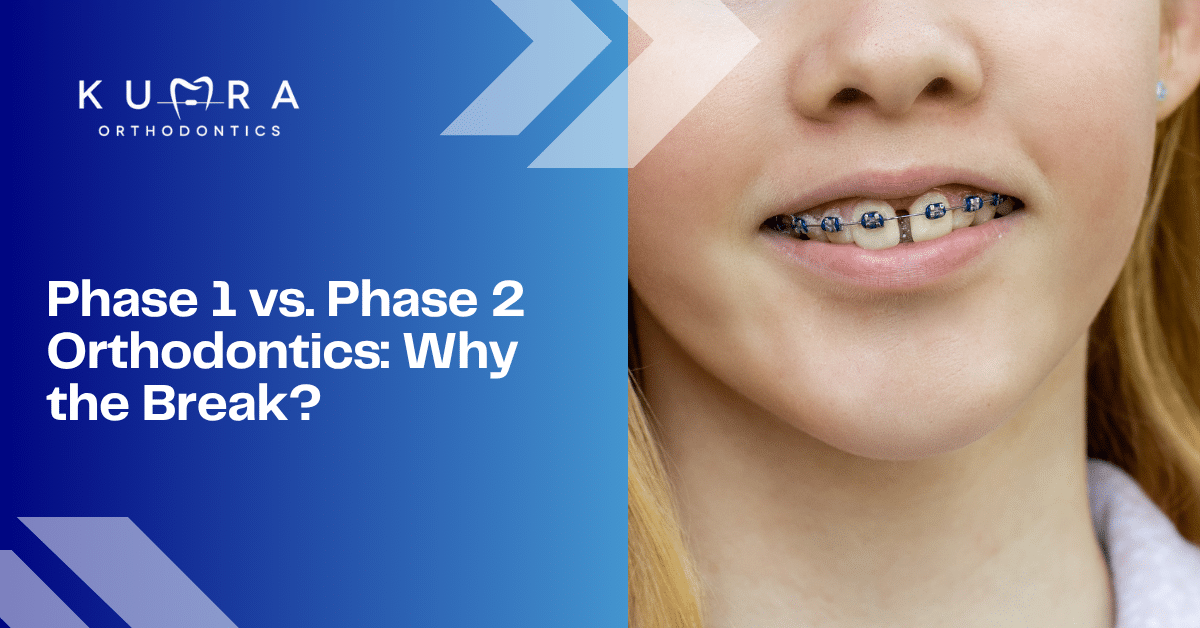
An early orthodontic evaluation does not automatically mean your child needs treatment now. Sometimes the right recommendation is to monitor development. Other times, a specific bite or eruption problem benefits from attention while your child is still growing.
At Kumra Orthodontics, we look at what is happening in your child’s mouth and whether the timing makes a difference. We want you to understand what we see, why we recommend treatment or observation, and what comes next.
If you are wondering whether to act now or wait, start with an evaluation. Here is what the age-seven recommendation means, what we assess, and how to make sense of a monitoring plan.

Why do we recommend a checkup by age seven?
The American Association of Orthodontists recommends a first orthodontic checkup no later than age seven. By then, many children have a combination of baby and permanent teeth that helps us assess developing alignment and jaw relationships.
You do not have to wait for every baby tooth to fall out. A child can have a useful orthodontic evaluation long before it is time for comprehensive treatment. If you notice a concern earlier, ask about it earlier.
Age seven is a checkpoint, not a deadline for starting braces. If your child is older and has not had an evaluation, the next step is still to schedule one. Bring your questions about what you have noticed rather than worrying that you should already know the answer.
What are we looking for at the first visit?
We assess how the teeth fit together, how permanent teeth are coming in, and whether there appears to be enough room for them. We also look at the relationship and width of the jaws. A tooth that looks crooked is only one part of that picture.
The AAO explains that examinations and appropriate imaging can reveal concerns below the gums, including missing, extra, or unerupted teeth. Those findings can affect timing even when a child’s smile does not look especially crowded.
Tell us about changes you have noticed: a baby tooth that seems to be staying in place, an adult tooth coming in unexpectedly, or a bite that looks different. Let us know what your child’s dentist has already discussed with you.
We can then connect the examination findings to your questions. Our kids orthodontics page shows what to expect at your child’s first evaluation.
What are the possible recommendations?
The AAO outlines three broad outcomes of an early evaluation: no treatment is expected, development should be followed before deciding about future treatment, or an identified problem would benefit from early intervention.
Read more: Phase 1 vs Phase 2 Orthodontics
No treatment is expected at this stage
We explain the findings and what, if anything, you should watch for. Continue your child’s regular dental care and raise new concerns if they appear. An orthodontic evaluation adds information about alignment and development; it does not replace routine care with the dentist.
We recommend monitoring
Monitoring means returning so we can compare development over time. We may be waiting to see how teeth erupt or how the bite changes. You should know what we are watching and when we want to see your child again.
We recommend treatment now
An early treatment recommendation should name the problem, explain why timing matters, and describe the intended change. Ask what we expect the treatment to accomplish and what may still need attention later.
When can early treatment be useful?
Certain bite relationships, significant crowding, or eruption concerns may warrant treatment before all permanent teeth are present. The reason for acting early must be specific to the child. A neighbor’s experience with an expander does not tell us whether your child needs one.
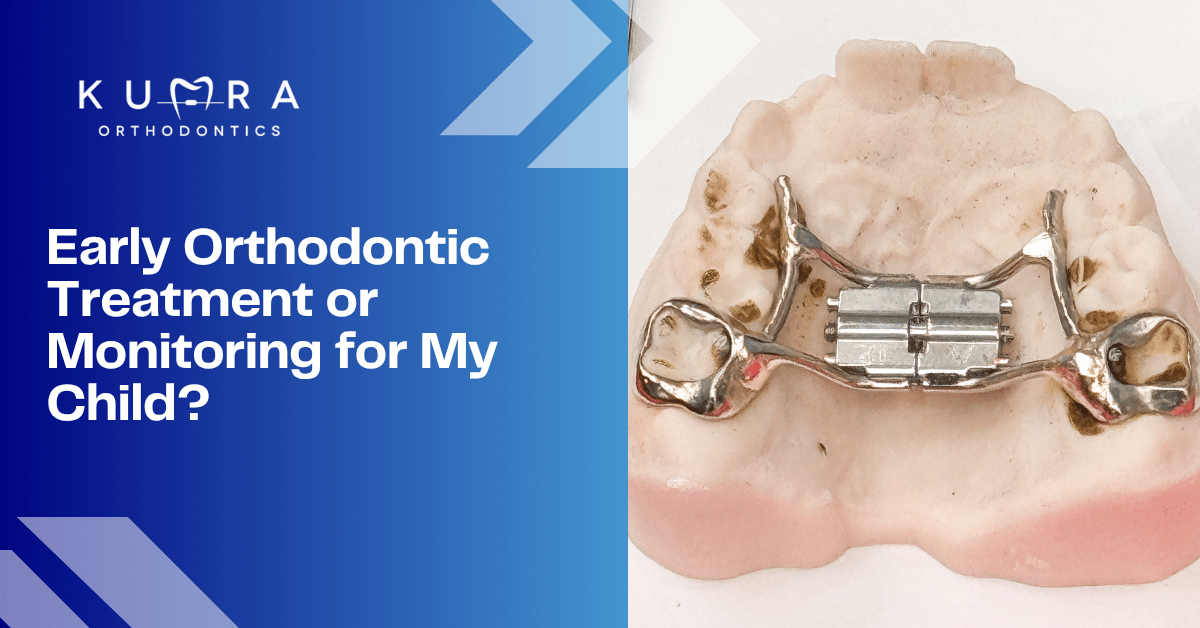
A narrow upper jaw is one possible example. The AAO describes palatal expansion as a way to address selected width and space problems. Whether expansion is appropriate depends on the examination and stage of development.
Early care can involve an appliance or another carefully timed intervention. Some children may need limited braces. We would not tell every seven-year-old that braces are either necessary or impossible simply because of their age.
You can review our braces treatment information for background, but the appliance should follow the diagnosis. First understand what we are trying to change, then how the proposed treatment would help.
Read more: How to Clean Your Palatal Expander
What does a useful monitoring plan include?
We want you to leave with more than “come back later.” A useful plan answers what we are waiting for, what we will compare at the next visit, and when that visit should happen.
Before leaving, ask:
- Which teeth or bite changes are you watching?
- What finding would make you recommend starting treatment?
- When should we return, and what if a change happens sooner?
- Is there anything our family dentist should know?
Keep the follow-up date somewhere your family will see it. If school or travel interferes, contact the office to reschedule rather than letting the appointment disappear from the calendar.
Monitoring also gives your child time to ask questions. If an appliance might be discussed later, you can explain that the next visit is a chance to see how their teeth are growing. There is no need to promise that braces are coming or that treatment will never be needed.
What changes should parents mention between visits?
The AAO’s first-visit guidance encourages evaluation when something seems wrong, including before age seven. You do not need to diagnose the problem yourself or wait for a referral before asking an orthodontist to assess it.
Contact us if you are concerned about a change in your child’s bite, a tooth coming in unexpectedly, or a problem that seems to be affecting eating or comfort. Explain what changed and when you first noticed it so we can advise you about the next step.
A photograph may help you communicate what you see, but it does not replace an examination when one is needed. If you have questions about an injury or dental pain, make that clear when you call rather than waiting for a routine growth check.
How do we discuss the decision with your family?
Bring your practical concerns into the conversation. Ask how appointments, cleaning, eating, and any home instructions would fit into your child’s day. A recommendation is easier to evaluate when you understand what it asks of the whole family.
If treatment is recommended, request an explanation of the expected benefits, limitations, and alternatives. You can also ask what would happen if you waited. We should be able to explain the reason for the timing in terms you can follow.
Do not feel pressured to understand every unfamiliar orthodontic term immediately. Ask us to show you the finding and explain it again. The aim is for you to understand your child’s plan well enough to make an informed decision and help them follow it.

Frequently asked questions
Does every seven-year-old need braces?
No. Age seven is a recommended time for an orthodontic evaluation. Treatment depends on the findings. Some children need early intervention, while others benefit from monitoring or do not need treatment at that stage.
Should we wait until all the baby teeth fall out?
No. A mix of baby and permanent teeth can give us useful information about development. An evaluation can help determine whether waiting is appropriate and what should be monitored.
Is monitoring the same as ignoring the problem?
No. A monitoring plan identifies what we are watching and includes follow-up. Ask us what changes would lead to treatment and when your child should return.
Does early treatment mean my child will avoid braces later?
Not necessarily. An early intervention may address a specific developing problem while later treatment handles the permanent teeth and bite. We will explain what the proposed early treatment is and is not intended to do.
Understand the right timing for your child
If you are unsure whether your child needs early treatment or monitoring, request an evaluation with Kumra Orthodontics. We can review the developing teeth and bite, explain our findings, and discuss a clear next step for your family.