If your child was recently fitted with a palatal expander, you likely left the clinic with a “key,” a quick demonstration, and a lingering sense of anxiety. It is the question every parent asks the moment they see the metal framework for the first time: “How on earth are we going to keep this thing clean?”
Most parents are handed a device at the fitting appointment with a 30-second rundown and then left to figure out the daily management on their own. This lack of guidance often leads to “Wrong-Tools Frustration,” where a standard toothbrush doesn’t quite do the job, food remains persistently stuck, and the appliance starts to feel like a hygiene burden.
Maintaining an expander doesn’t have to be a multi-hour ordeal. It requires a strategic, tiered system rather than just “brushing harder.” By understanding the clinical reasoning behind each step and using the right equipment you can ensure your child’s treatment stays on schedule without compromising their dental health.

Why Expanders Require a Different Approach to Oral Hygiene
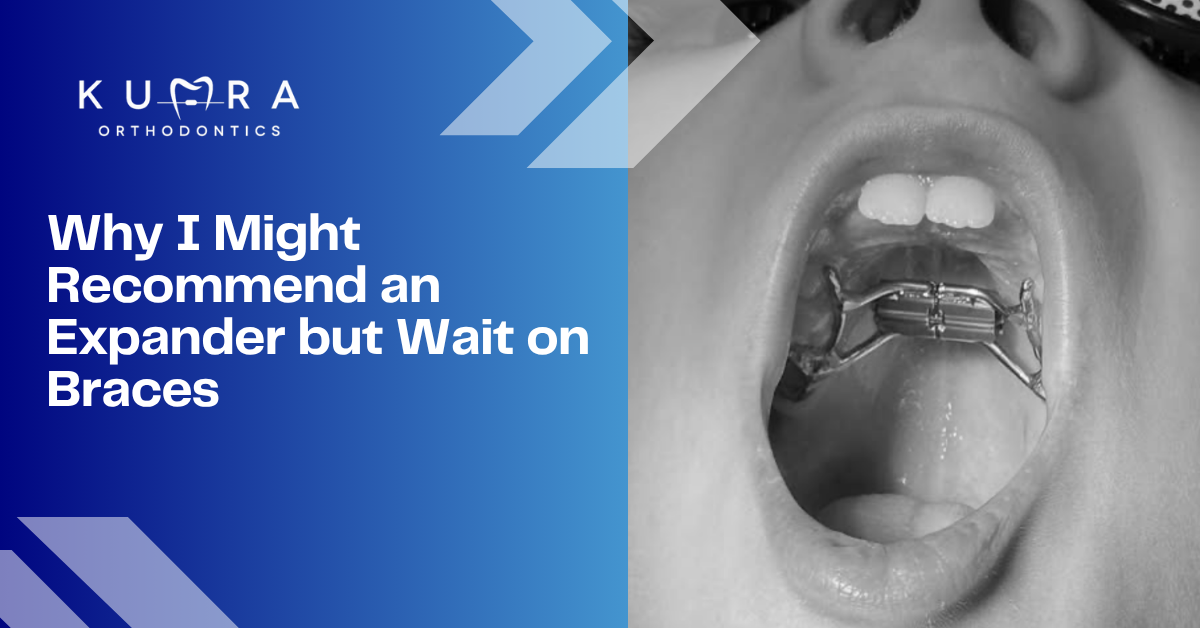
A palatal expander is not just another piece of hardware; it creates a new physical structure on the roof of the mouth. Because it is custom-fitted to the palate often using a precise 3D iTero scan to ensure a perfect fit it sits very close to the soft tissue. This creates “micro-spaces” between the appliance and the palate where food particles and bacteria proliferate.
The most critical area is the expansion screw (the turning mechanism) and the bracket connections. These are “biofilm magnets.” If plaque builds up here silently, it can lead to two major issues:
- White Spot Lesions (WSLs): These are areas of permanent enamel decalcification. When plaque is trapped against the enamel for too long, the acid strips the minerals away, leaving chalky white marks that remain even after the expander is removed.
As a board-certified orthodontist would explain, the goal is “mechanical debridement” physically moving the debris out of those tight gaps before it can cause chemical damage.
The Three-Tier Daily Routine
To make hygiene manageable, frame it as a learnable system consisting of three distinct tiers. This mental model helps your child understand that not every cleaning session needs to be a deep scrub.
Tier 1 After Every Meal (60 Seconds)
The goal here is simple: dislodge loose food particles before they settle into the hardware and harden.
- The Action: Rinse vigorously with water immediately after eating.
- The Strategy: This step doesn’t require tools and takes under a minute. However, school lunches and packed snacks are the primary “compliance gap.”
- Parent Tip: Pack a small water bottle in your child’s lunch bag. Make it a habit for them to take a few “swish-and-swallow” gulps before leaving the cafeteria or the practice field.
Tier 2 Twice-Daily Full Brushing Sequence (3-4 Minutes)
This occurs in the morning and before bed. The most common error is brushing only the teeth and treating the expander as an obstacle to avoid.
- Step 1: Brush all tooth surfaces as normal using a soft-bristle toothbrush and fluoride toothpaste.
- Step 2: Angle the brush upward (at roughly a 45-degree angle) to reach under the expander arms.
- Step 3: Use the “Sulcular Brushing” method small, circular vibrating motions around the metal bands that encircle the molars.
- Step 4: Brush the roof of the mouth and the turning mechanism directly.
- Why it matters: Standard brushing only cleans 60% of the hardware. The “angle up” technique is what reaches the hidden biofilm.
Tier 3 Nightly Deep Clean (2-3 Minutes)
This is the single highest-impact upgrade for expander hygiene. A toothbrush simply cannot navigate the metal framework or the gap between the appliance and the palate.
- Proxy Brush (Interdental Brush): Use this small, Christmas-tree-shaped brush to work gently around each band and bracket. It is the only tool that can effectively dislodge “packed” food like bread or dough from the screw mechanism.
- Water Flosser: For children, use a low-to-medium pressure setting (roughly 10-30 PSI). Aim the “Orthodontic Tip” (which has a tapered brush) at the center screw and the contact points where the metal meets the palate.
The Four Tools That Actually Work
Investing in the right tools is often the difference between a frustrated child and a successful treatment outcome. While you are managing the Cost & Financing of orthodontic care, these small additions to your bathroom cabinet provide “smile insurance.”
Read more: How Much Do Braces & Invisalign Cost in DC & Stafford? Costs, Insurance & Payment Plans, Answered
- Soft-Bristle Toothbrush: Hard bristles can cause micro-scratches on medical-grade acrylic, which actually increases bacterial adhesion. Manual or electric both work, provided the vibration doesn’t irritate your child’s palatal tissue.
- Proxy Brushes: These are better than “floss threaders” for expanders because they are easier for small hands to navigate through the metal framework.
- Water Flosser with Orthodontic Tip: This is the gold standard for flushing out the “ceiling” of the appliance.
- Fluoride Rinse: This should be the final step. The ADA guidance is “spit, don’t rinse.” Your child should swish for one minute, spit it out, and not drink or eat anything for at least 30 minutes to allow the fluoride to strengthen the enamel against WSLs.
Foods That Make Hygiene Significantly Harder
Rather than a “don’t eat” list, think of these as “foods that add 5 minutes to your cleaning routine.” When your child is weighing Invisalign vs. Braces, the dietary freedom is often a major factor, but with a fixed expander, some foods present mechanical risks:
- Sticky (Caramels, Gummies): These create a “suction” effect on the bands and can adhere directly to the acrylic. They cannot be rinsed away; they must be physically scraped off.
- Chewy (Pizza Dough, Bagels): Yeast-based foods “pack” into the expansion screw. This is known as the “5-Minute Rule” it will take at least five minutes of concentrated effort to clear a single bite of stuck bread.
- Hard (Nuts, Raw Carrots): Large, hard pieces can exert enough force to dislodge the cement seal on the bands, requiring an emergency trip to the orthodontist.
Getting Your Child to Actually Follow the Routine
Compliance is a parenting challenge, not just a clinical one. Orthodontists, including experts like Dr. Bob Kumra, often suggest a “conservative but consistent” approach. For parents of younger children, especially those in the “Golden Window” for Teen Orthodontics (ages 7-12), co-participation is more effective than instruction.
- The Checkbox Method: Use a visual routine chart posted on the bathroom mirror. Tactile feedback (checking a box) is highly effective for children aged 7-10.
- The Modeling Habit: Brush your teeth at the same time as your child. Modeling the behavior reduces the feeling that hygiene is a “chore” being forced upon them.
- Consequence Awareness (Age 10+): Adolescents respond more to aesthetic motivation. Explaining that “white spots” are permanent and stay even after the metal comes off is often a stronger motivator than “avoiding cavities.”
Wondering What Treatment Might Look Like for Your Child?

Every child’s anatomy is unique, and the hygiene routine is just one part of the puzzle. Whether you are dealing with a crossbite (where the top jaw is narrower than the bottom, like a lid that doesn’t fit its jar) or crowding, understanding the timeline is the first step toward confidence.
Before committing to any treatment path, it helps to understand what type of intervention your child’s situation might call for. Our Treatment Type and Timeline Quiz walks you through the key factors in under two minutes.